Programming
Problem 4
- Make lisa tell if the number is even or odd
- lisa knowledge
* multiply
+ add
/ division
% modulus or remainder
- subtraction
== equals
!= not equals
< <= >= >
= assignment
1. number = 43
2. remainder = number % 2
3. if remainder == 0 say even
4. else say odd
- Generally once you convert the solution into code, we need to test by supplying multiple values. This approach is referred as unit testing
- For figuring out values we go with boundary conditions
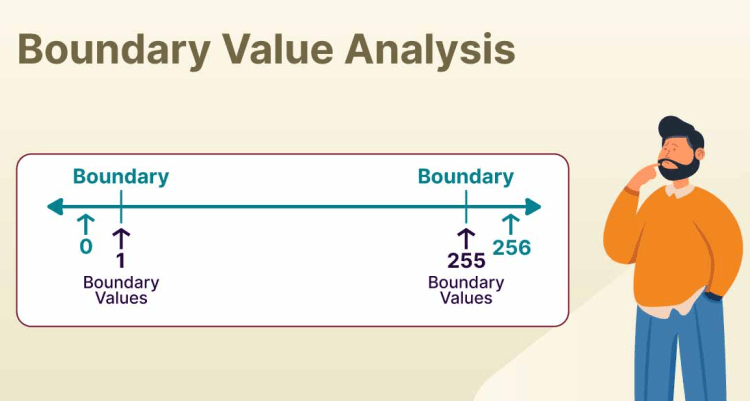
- Reasoning: Developer finding defects in the code which he/she writes is most effective in terms of time and cost rather than QA finding it and in worse case customer finding it.
Problem 5
- Make lisa tell if the number passed is prime or not
- lisa knowledge
* multiply
+ add
/ division
% modulus or remainder
- subtraction
== equals
!= not equals
< <= >= >
= assignment
1. number = 2
2. if number < 2 say not prime and exit
3. if number == 2 say prime and exit
4. start = 2
5. remainder = number % start
6. if remainder == 0 say not prime and exit
7. start = start + 1
8. if start < number/2 go to step 5
9. say prime
Problem 6
- Lisa has a book/dictionary where the entries are like which represent gst
  key      value
clothing   5
gold  5
school 0
profesional education 18
..
...
..
..
- We need to pass item category and price to lisa she should tell the actual price including gst
- Solution
1. item = 'laptop'
2. item_category = 'electronics'
3. item_price = 100000
4. findout the percentage from gst_dictionary and store it in gst
   gst = gst_dictionary(item_category)
5. total_price = total_price + total_price * gst/100
6. say total_price
Conditional’s
Income Tax Slabs (Rs)           Income Tax Rate (%)
From 0 to 3,00,000                  0
From 3,00,001 to 6,00,000           5
From 6,00,001 to 9,00,000           10
From 9,00,001 to 12,00,000          15
From 12,00,001 to 15,00,000         20
From 15,00,000 to 100,00,000        30
Above 100,00,000                    35
salary = 200000
if salary > 0 and salary <= 300000
    tax_rate = 0
else if salary > 300000 and salary <= 600000
    tax_rate = 5
else if salary > 600000 and salary <= 900000
    tax_rate = 10
else if salary > 900000 and salary <= 1200000
    tax_rate = 15
else if salary > 1200000 and salary <= 1500000
    tax_rate = 20
else if salary > 1500000 and salary <= 1000000
    tax_rate = 30
else if salary > 10000000
    tax_rate = 35
say tax_rate
tax = salary * tax_rate / 100
net = salary - tax
loops
- Generally based on some conditions we might need to execute certain line(s) multiple times, this is where we use loops
number = 7
if number < 2
    say not prime
    exit
end if
if number == 2
    say prime
    exit
end if
start = 2
until start < number
    remainder = number % start
    if remainder == 0
        say not prime
        exit
    start = start + 1
end until
say prime
Resources
Make lisa solve Project euler problem 1
* multiply
+ add
/ division
% modulus or remainder
- subtraction
== equals
!= not equals
< <= >= >
= assignment
and
or
max = 1000
result = 0
start = 1
until start < max
    if start%3 == 0 or start%5 == 0
        result = result + start
    end if
    start = start + 1
end until
say result
Make lisa solve Project euler problem 2
first = 1
second = 2
result = 2
max = 4000000
until first + second < max
    third = first + second
    if third % 2 == 0
        result = result + third
    end if
    first = second
    second = third
end until
print result
Conceptual
- Inter Process Communication (IPC) was introduced to allow one process communicating with same process on the same host
- But running everything on same host was expired very soon as Client Server Compuational model has become of extreme importance
- To make this communication possible we have to deal with networking i.e where tcp or udp or http or https come into play
- To solve this problem, the popular technologies
- Remoting
- Web Services was introduced by microsoft (WSDL)
- to make it simple and scalable REST APIs or HTTP APIs were introduced


